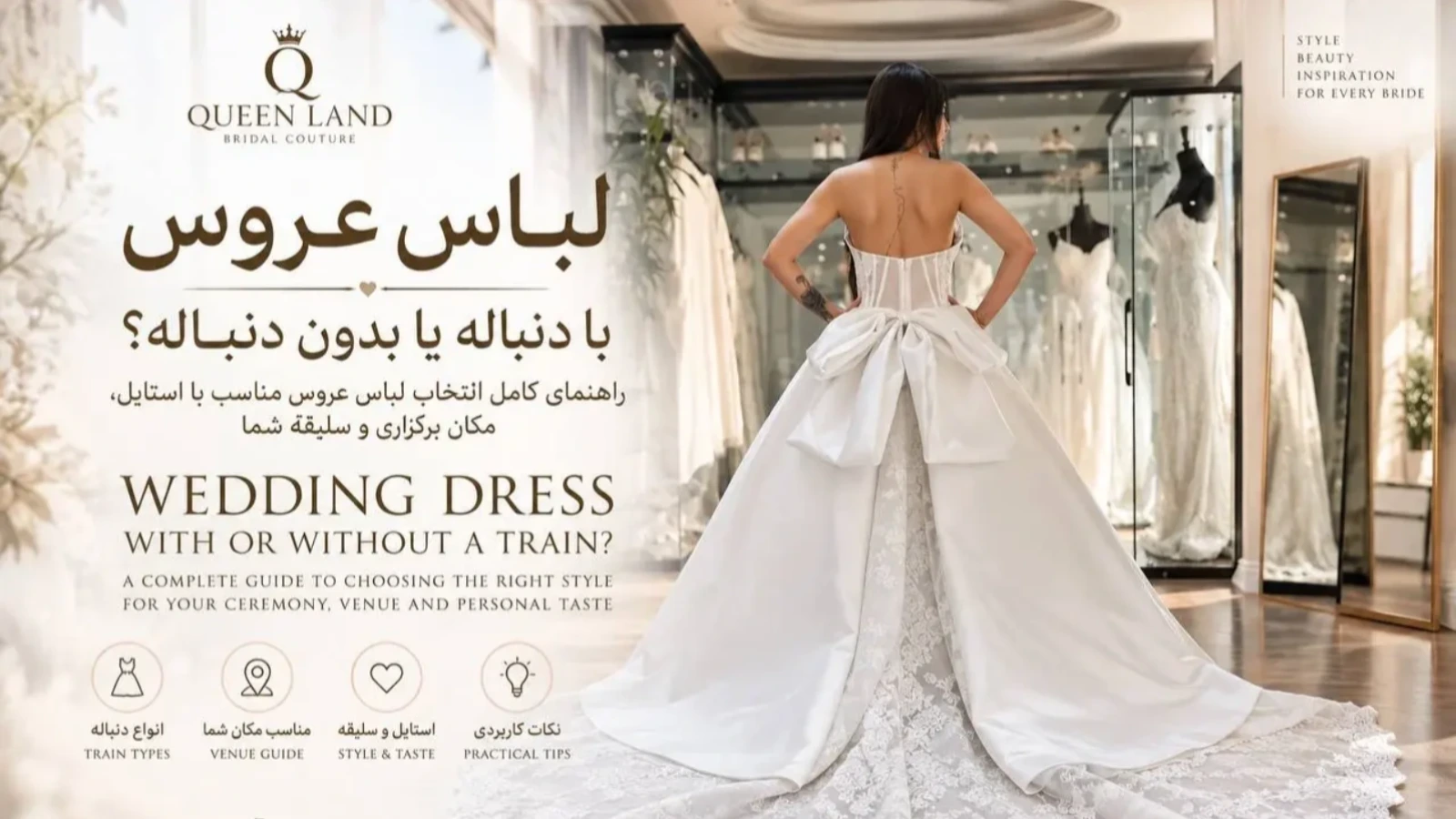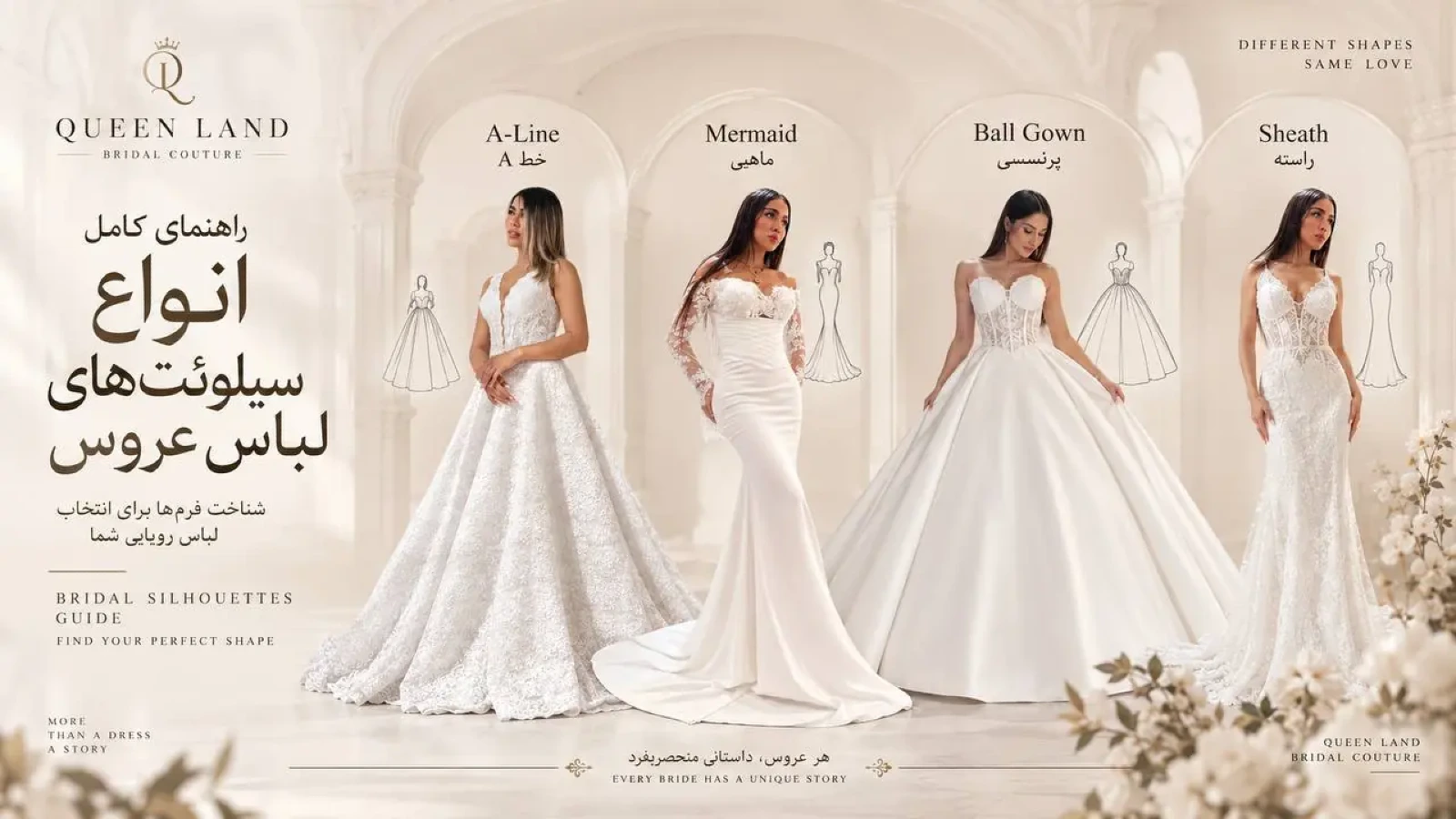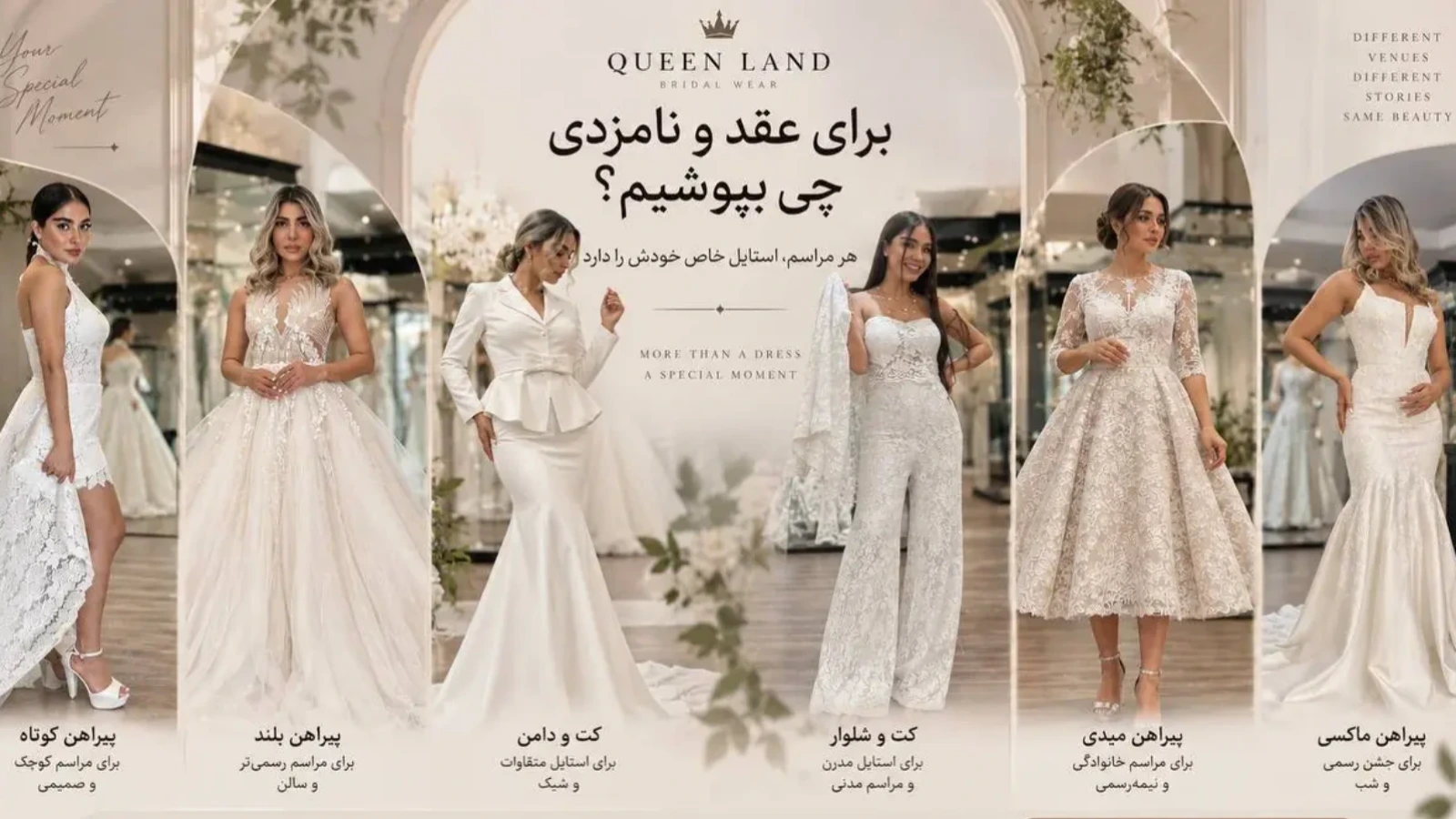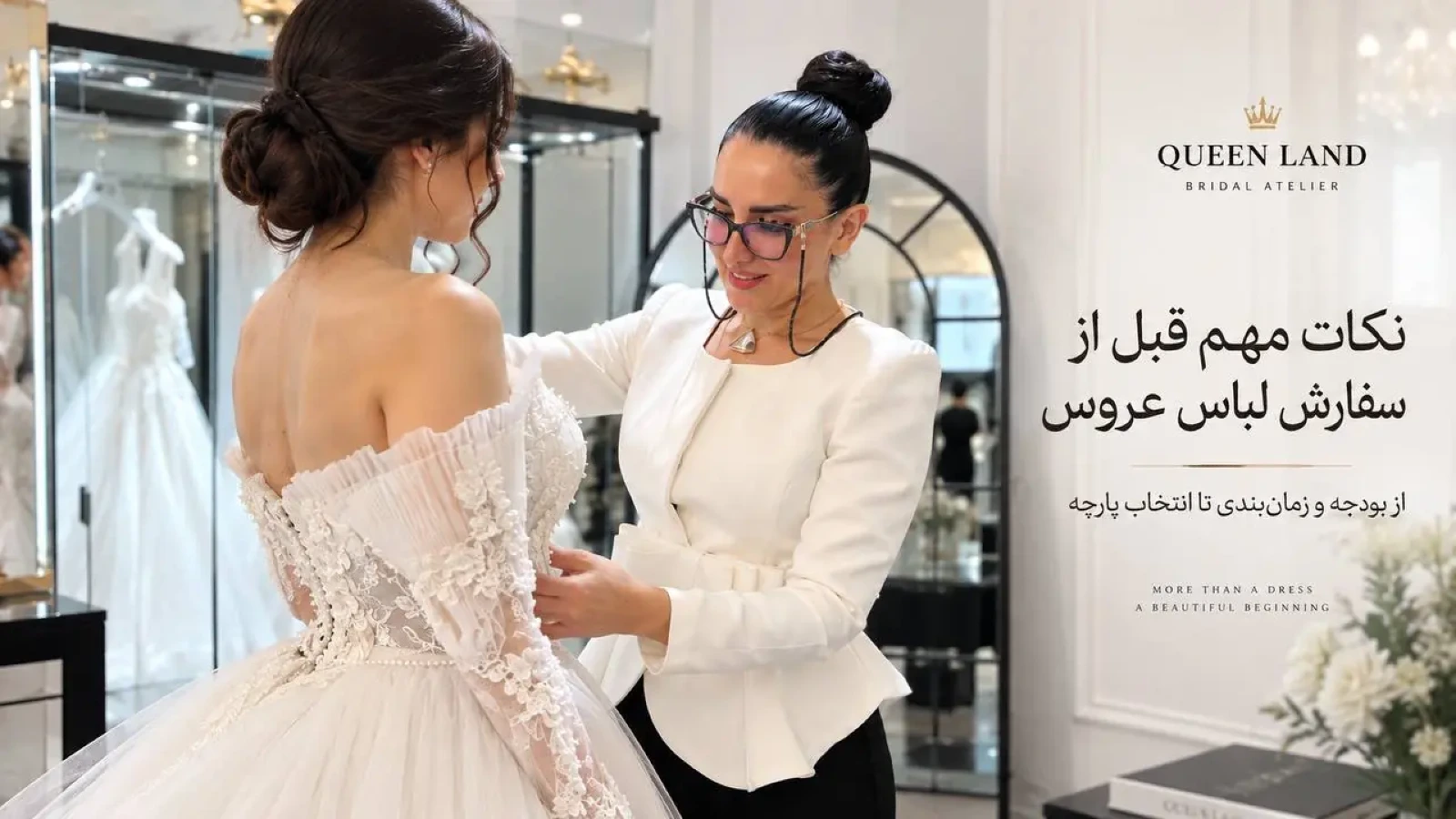
Important Things to Know Before Ordering a Wedding Dress; From Budget and Timing to Fabric Selection
Choosing a wedding dress usually starts with a photograph. You see a particular design, like the shape of the skirt or neckline, and imagine that if you order the same dress, the final result will look exactly like the image.
But a wedding dress is much more than its final appearance.
Behind that image is a series of technical decisions: fabric selection, bodice structure, corset construction, skirt pattern, number of layers, placement of lace and embellishments, measurements, fittings, and alterations.
As a result, two dresses with almost identical appearances can produce completely different results on two different bodies.
Time is also an important factor. Custom and Made-to-Order dresses generally require several months for production, and once the dress is delivered, it may still require alterations and several fittings. For many wedding dresses, the entire process from purchase to final alterations can take several months.
So before saying “I want this dress,” you need to know exactly what you are ordering.
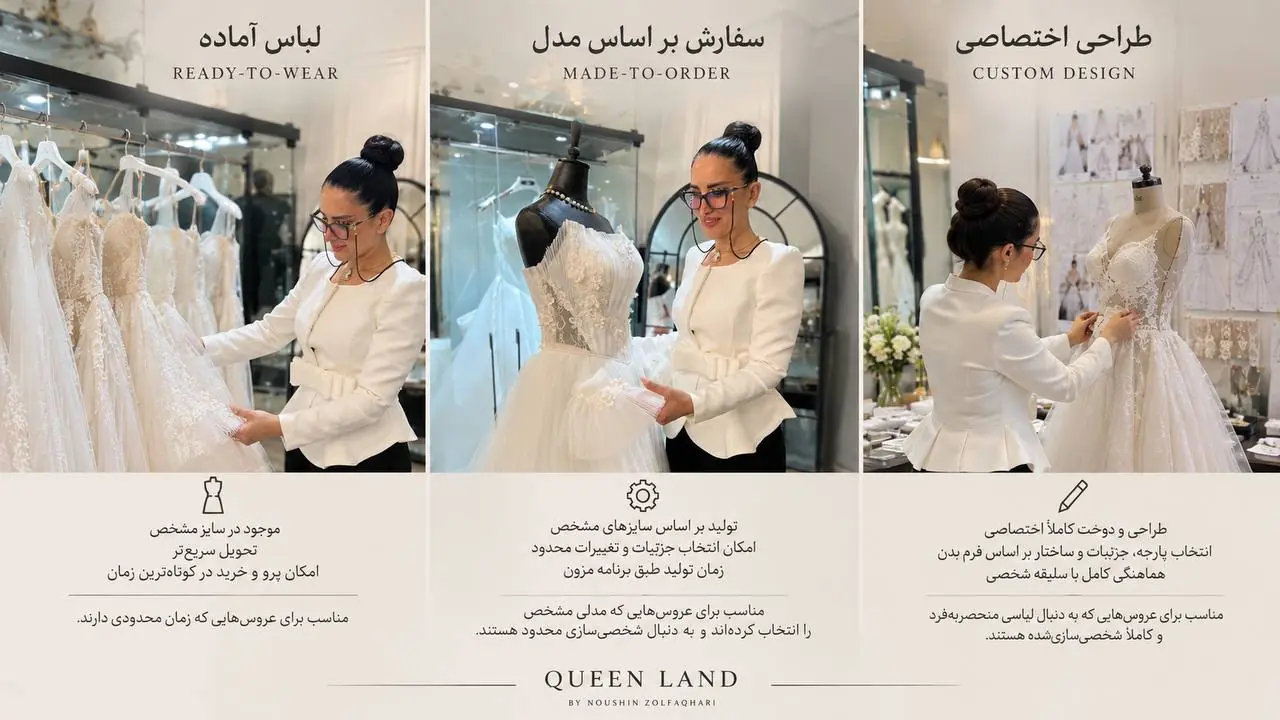
First, Determine What Type of Dress You Are Ordering
Before discussing price and fabric, determine which category your dress belongs to.
Ready-to-Wear
A dress that has already been produced and is available in a specific size. It can be altered to fit your body if necessary.
Made-to-Order
The design already exists, but the dress is produced after the order is placed. It is generally made according to specified sizes and then adjusted during the final fittings.
Custom Dress
A dress that allows for greater personalization in areas such as the fabric, neckline, sleeves, skirt, or other design details.
Fully Custom Design
In this type of order, the design and construction of the dress can be developed specifically for one individual. Design, pattern making, material selection, sampling, and fittings may therefore play a greater role.
These differences are not merely commercial terms; they can affect production time, cost, number of fittings, and the degree to which the dress can be modified.
In a fully custom design, even a prototype may sometimes be created and adjusted before the main fabric is cut, allowing the designer to evaluate the garment’s shape on the body.
Do Not Confuse a Reference Image with an Executable Result
One of the most important points when ordering a wedding dress, especially when choosing a design from a photograph, is understanding that a photograph represents the final result of a design; it is not a sewing pattern.
For example, you may see a simple fitted dress in an image, while achieving the same shape may require:
An internal corset
Boning
Multiple lining layers
Structural layers
Fabric with the appropriate body
Internal cups or padding
Specific pattern cutting
Even the photography angle, lighting, model’s pose, and image editing can change how the dress appears.
Therefore, if you have a reference image, instead of simply saying:
“I want exactly this.”
Identify which elements are most important to you:
Neckline + Bodice Shape + Waist Placement + Skirt Shape + Fabric Appearance + Volume + Train + Embellishment
This helps the designer understand which elements are non-negotiable and which can be adapted according to your body and the technical possibilities of production.
Determine Your Real Budget Before Choosing the Design
The price of a wedding dress is not always the final cost.
The total cost may include:
The dress itself
Special fabrics
Lace or guipure
Beading and crystals
Appliqué
Design modifications
Size alterations
Length adjustments
Neckline or sleeve changes
Adding a train
Veil
Gloves
Belt
Internal cups and structural components
Separate accessories
Final preparation services
Therefore, it is better to have two separate figures before choosing a design.
Dress Budget
The amount you have allocated for the dress itself.
Final Bridal Styling Budget
The amount you have allocated for the dress, alterations, veil, shoes, and other related elements.
This simple distinction prevents a common mistake: choosing a dress whose initial price fits your budget, only to exceed the budget after alterations and accessories are added.
Calculate the Ordering Timeline From Your Wedding Date
One of the most common mistakes is calculating the ordering timeline based only on how long it takes to make the dress.
Instead, consider the entire sequence:
Design Selection → Order Placement → Production → Delivery → Alterations → Final Fittings → Final Preparation
Current bridal shopping guides commonly suggest beginning the process around 8–10 months before the wedding, while custom dresses and designs involving special modifications may require additional time.
So the right question is not:
“How long does it take to make the dress?”
It is:
“How much time is needed from the day I place the order until the dress is completely ready to wear?”
These two timelines can be very different.
If the Wedding Is Soon, Choose the Design Strategically
If there is limited time before the wedding, choosing a highly complex design that requires special materials and multiple modifications can make the process more difficult.
Depending on the atelier, options such as:
Ready-to-wear dresses
Sample dresses
Dresses already available in the boutique
Simpler designs
Rush orders
may be worth considering.
Rush orders, however, may depend on production capacity, design complexity, and the availability of fabric and materials, and they may involve an additional fee.
So if you have limited time, tell the atelier during the first consultation—not after the design has already been selected and the contract signed.
Do Not Choose Fabric Based Only on Its Appearance or Feel
Fabric should be selected according to the structure of the dress.
For fabric selection, consider:
Fabric Characteristic | Why It Matters |
Body | Affects the shape of the skirt and bodice |
Weight | Affects comfort and movement |
Drape | Changes the final shape of the garment |
Thickness | Affects construction and layering |
Sheen | Changes how the dress appears under light |
Stretch | Affects fit and comfort |
Texture | Influences the visual appearance and surface details |
Sewability | Affects cutting, construction, and alterations |
For example, if the design has a highly structured and voluminous skirt, a fabric with very soft drape may not create the same shape without appropriate layers and structural support.
Conversely, using a very stiff fabric for a fluid design can eliminate the natural movement intended for the dress.
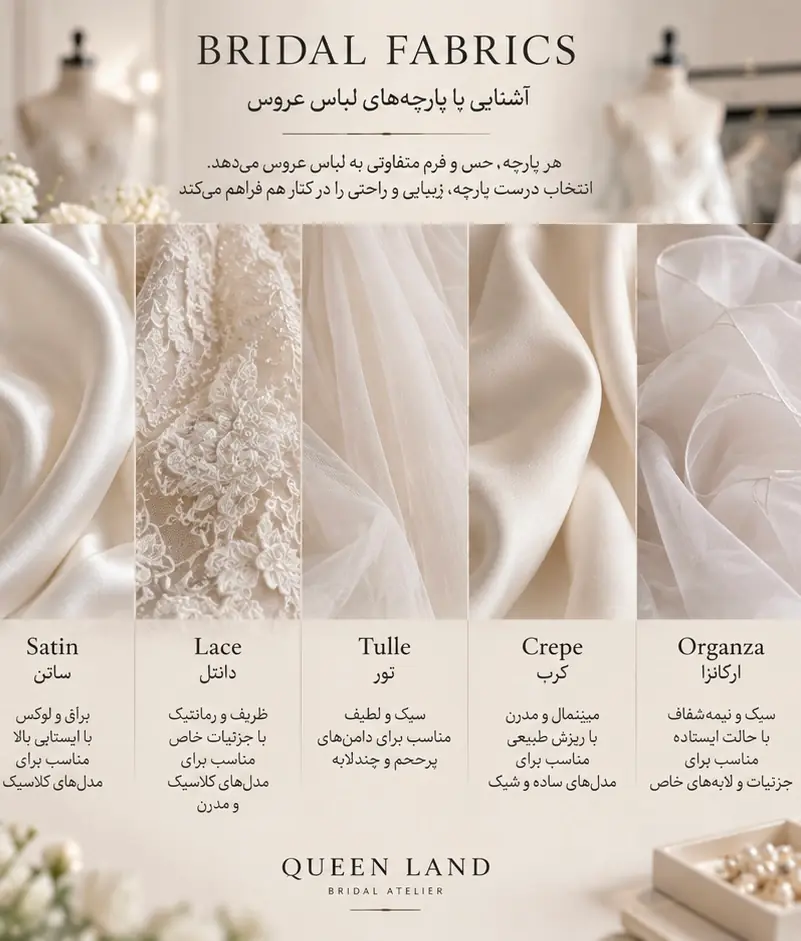
The model, structure, and fabric should therefore be considered together.
A Corset Is Not Only About Making the Waist Look Smaller
In many structured wedding dresses, the corset is one of the most important parts of the garment.
A corset can help with:
Creating the shape of the bodice
Defining the waistline
Supporting the bust
Keeping the dress securely in place
Creating the desired shape for the skirt
Controlling the fit of the garment
But a well-designed corset should not focus only on appearance.
If the dress will be worn for several hours, you should also consider comfort, pressure, boning placement, cups, fastening method, and adjustability.
In some designs, corset lacing can also provide a degree of fit adjustment if the body changes slightly.
Do Not Underestimate the Weight of the Dress
A wedding dress can become considerably heavier because of:
Multiple skirt layers
Lace
Beading
Crystals
Pearls
Appliqué
Multiple lining layers
A long train
This matters when choosing the design.
A dress worn for a short ceremony and a dress that will be worn from morning until the end of the reception do not have the same comfort requirements.
So ask:
“Approximately how much does the dress weigh?”
And if the dress is heavily embellished:
“Is the internal structure designed to support the weight of the embellishments?”
Consider the Train Beyond Its Appearance
A train is one of the elements that can dramatically change the appearance of a wedding dress, but it also needs to be manageable in real use.
Before ordering, ask:
How long is the train?
Can it be bustled?
How is it gathered or secured?
Is it suitable for the venue?
Will it create difficulties when entering or leaving?
Who will help manage it during the event?
Many dresses can incorporate a bustle, allowing the train to be lifted and secured to the dress when walking, dancing, or moving around.
Decide on Possible Modifications Before Ordering
Sometimes a bride chooses a dress and only after ordering says:
“I also want sleeves.”
Or:
“Make the neckline higher.”
Or:
“Make the train longer.”
But not all alterations are equally easy to execute.
Some changes are relatively simple, such as:
Shortening the length
Adjusting the waist
Minor bodice adjustments
Adjusting straps
Other changes may affect the construction of the dress, such as:
Major neckline changes
Changing the skirt silhouette
Adding sleeves to a specialized design
Changing the position of structural seams
Modifying the corset structure
Adding significant volume to the skirt
Therefore, if you already have a modification in mind, mention it before placing the order, not after the dress has been produced.
Consider Body-Size Changes After Ordering
This is particularly important for brides who have several months before the wedding.
If the final alterations are completed too early and your body changes afterward, the fit may no longer be perfect on the wedding day.
That is why the timing of final fittings is important.
If you are planning to lose or gain weight, discuss this with the atelier before finalizing the measurement and fitting schedule.
A Wedding Dress Fitting Is Not Just About Measurements
Fittings are one of the most important stages in turning a beautiful dress into a dress that fits your body properly.
During a fitting, do not simply stand in front of the mirror.
With the dress on:
Walk.
Sit down.
Move your arms.
Take a few faster steps.
Try stairs if possible.
Practice movements you may need during the ceremony or reception.
During wedding dress fittings, areas such as the bodice, hemline, straps, and train are commonly reviewed and adjusted. It is also helpful to bring the shoes and undergarments you plan to wear on the wedding day to important fittings.
Decide on Your Shoes Before the Final Hem Adjustment
This is an important detail.
If you plan to wear high heels on your wedding day but have the dress hemmed while wearing flat shoes, the final dress length may be incorrect.
It is therefore better to bring your actual wedding shoes—or shoes with exactly the same heel height—to the important fittings.
Even if you later change the shoes, a difference in heel height can affect the length of the dress.
Consider Bridal Underwear as Part of the Design
Underwear is not simply a personal choice; it can directly affect the final shape of the dress.
This is especially important with dresses featuring:
Strapless necklines
Corsets
Open backs
Fitted fabrics
Structured cuts
The type of underwear can change the final shape.
Therefore, the underwear, cups, or shapewear you plan to wear on the wedding day should ideally be determined before the final fittings.
Confirm the Number of Fittings in Advance
There is no fixed number that applies to every dress.
A simple dress may require only limited alterations, while a dress with:
Corsetry
Multiple skirt layers
Beading
Lace
Sleeves
A train
Custom modifications
may require more fitting and adjustment.
Several fitting stages are common for wedding dresses. The first fitting is generally used to identify the main alterations, while later fittings refine the fit, length, and final details.
Check Alteration Costs Separately
Ask this question before paying the deposit:
“Are alterations included in the price of the dress or charged separately?”
Alterations may include:
Shortening the hem
Taking in the waist
Adjusting the bodice
Adjusting straps
Changing the neckline
Altering sleeves
Adjusting the train
Creating a bustle
The cost can vary depending on the fabric, amount of work, and complexity of the dress, particularly when the garment contains lace, beading, or delicate embellishments.
Ask About Fabric and Material Substitutions
Sometimes the fabric you see in a reference image is not necessarily the exact fabric that will be used for the final dress.
If your design includes special materials, clarify:
What type of fabric is it?
Will the same fabric be used for the order?
What happens if it becomes unavailable?
What is the exact fabric color?
Is the lace or appliqué the same as the reference?
What type of stones or crystals will be used?
This is especially important for dresses whose appearance depends heavily on texture and the way the materials reflect light.
Do Not Sign the Contract Only for the Price
Before paying a deposit, the main order details should be documented.
At minimum, check the following:
Item | What Should Be Specified |
Design | Name, code, or reference image |
Size | Recorded size |
Color | Exact color |
Fabric | Fabric type |
Embellishments | Type and amount |
Modifications | All agreed changes |
Delivery | Specific date or timeframe |
Fittings | Number and approximate schedule |
Alterations | Included or charged separately |
Accessories | Items included with the dress |
Payment | Deposit and final payment |
Rush Order | Conditions and possible additional cost |
Order Changes | Conditions for modifications or cancellation |
Ask These 15 Questions Before Ordering
You can save this checklist and take it with you when visiting an atelier:
Is the dress ready-to-wear or made-to-order?
What is the exact production time?
When will the dress be delivered?
How many fittings will I have?
Are alterations included or charged separately?
What exactly is the fabric?
How is the corset structured?
Approximately how much does the dress weigh?
Can the train be bustled?
Can the neckline, sleeves, or skirt be changed?
What is the cost of custom modifications?
Are the veil and accessories included?
What happens if my body size changes, and when will the final alterations be made?
What are the deposit and payment terms?
What happens if the dress is delayed?
Wedding Dress Ordering Timeline
A practical planning framework can look like this:
Time Before the Wedding | Main Task |
9–12 months | Set the budget and start researching designs |
8–10 months | Choose the design and place the order |
5–6 months | Finalize shoes, underwear, and key accessories |
3–4 months | Possible dress delivery and start of alterations |
6–8 weeks | Main fittings and alterations |
2–3 weeks | Final fitting |
Wedding week | Final delivery, inspection, pressing, and preparation |
This timeline is not a fixed rule for every dress. Ready-to-wear, Made-to-Order, fully custom, and rush orders can all have different schedules.
Queen Land Wedding Dresses; Design Begins Beyond Appearance
At Queen Land, the approach to wedding dress design is not limited to choosing a beautiful silhouette.
Under the design direction of Noushin Zolfaghari, attention is given to the relationship between body shape, garment structure, fabric, proportions, details, and the final purpose of the dress.
For example, when a dress has a structured corset and voluminous skirt, it cannot be evaluated only by its appearance. You also need to understand:
How does the corset support the body?
How is the weight of the skirt controlled?
How do the skirt layers create volume?
What type of body does the fabric have?
Where are the embellishments concentrated?
How is the train managed?
How does the dress perform during movement?
This approach takes the design beyond the final image and turns it into a garment designed for the bride’s body and real occasion.
Final Checklist Before Paying the Deposit
Before finalizing the order, make sure:
☐ The final design is confirmed.
☐ The reference image or design has been documented.
☐ The final budget is clear.
☐ You know the additional costs.
☐ The fabric type is confirmed.
☐ The color is confirmed.
☐ Embellishment details are confirmed.
☐ The corset structure is clear.
☐ The approximate weight and volume are acceptable.
☐ Production time is confirmed.
☐ Delivery date is confirmed.
☐ The number of fittings is confirmed.
☐ Alteration costs are confirmed.
☐ Modification conditions are clear.
☐ The veil and included accessories are specified.
☐ Payment terms are clear.
☐ The order details are recorded in the contract.
Conclusion
Ordering a wedding dress does not begin when you choose a beautiful photograph. It begins when you know what dress, with what construction, fabric, timeline, and cost, is going to be made for you.
The design matters, but equal attention should be given to fit, internal structure, comfort, weight, fabric, train, fittings, and alterations.
If the dress is custom-made, include production and alteration time in your schedule from the beginning. If you have a reference image, identify the design elements rather than focusing only on its overall appearance. If you are planning to change size, take the timing of the final fittings seriously. And before paying the deposit, make sure all important details are documented.
Ultimately, a good wedding dress is not simply a dress that looks beautiful in a photograph; it should fit properly, allow movement, suit the occasion, and be exactly what you planned for on your wedding day.
At Queen Land, the approach to wedding dresses also goes beyond appearance, because a successful design is created when beauty, structure, proportion, and function come together.
Frequently Asked Questions
How many months before the wedding should I order my wedding dress?
For many wedding dresses, beginning the process around 8–10 months before the wedding provides a comfortable timeline. Custom dresses and complex designs may require more time.
Does a custom wedding dress require fittings?
Yes. Even custom dresses may require several fittings and alterations to achieve the final fit.
Are wedding dress alterations charged separately?
This depends on the atelier and contract. Before ordering, clarify which alterations are included in the dress price and which services are charged separately.
When should I choose my wedding shoes?
The shoes—or at least the exact heel height—should ideally be determined before the final hem adjustment, because heel height directly affects the length of the dress.
What happens if my weight changes after ordering the dress?
The timing of the final fittings becomes especially important. Discuss potential body-size changes with the atelier so that the final alterations are scheduled appropriately.
What fabric is best for a wedding dress?
There is no single fabric that is best for every design. The fabric should be selected according to the silhouette, garment structure, season, drape, and desired level of volume.
How many fittings are needed for a wedding dress?
The number depends on the design and amount of alterations required. More complex dresses may require several fitting stages.
Can every wedding dress be copied from a photograph?
No. The possibility of reproducing a design depends on its pattern, construction, fabric, materials, and details. It is better to discuss the key design elements and possible modifications with the designer.
What is most important in a corset wedding dress?
In addition to appearance, the internal structure, support, comfort, fastening system, and adjustability should be considered.
What should I bring to the final fitting?
Your wedding shoes, the underwear or shapewear you plan to wear, and, if possible, the accessories that will be used with the dress.